

Beam Scale

Artist/Maker
Dutton & Smith
Place Made
England (probably)
Date Made
1780-1810
Medium
copper, oak, brass, cord
Dimensions
HOA 2 1/8; WOA 9 3/4; DOA 5 1/4
Accession Number
3193.1
Description
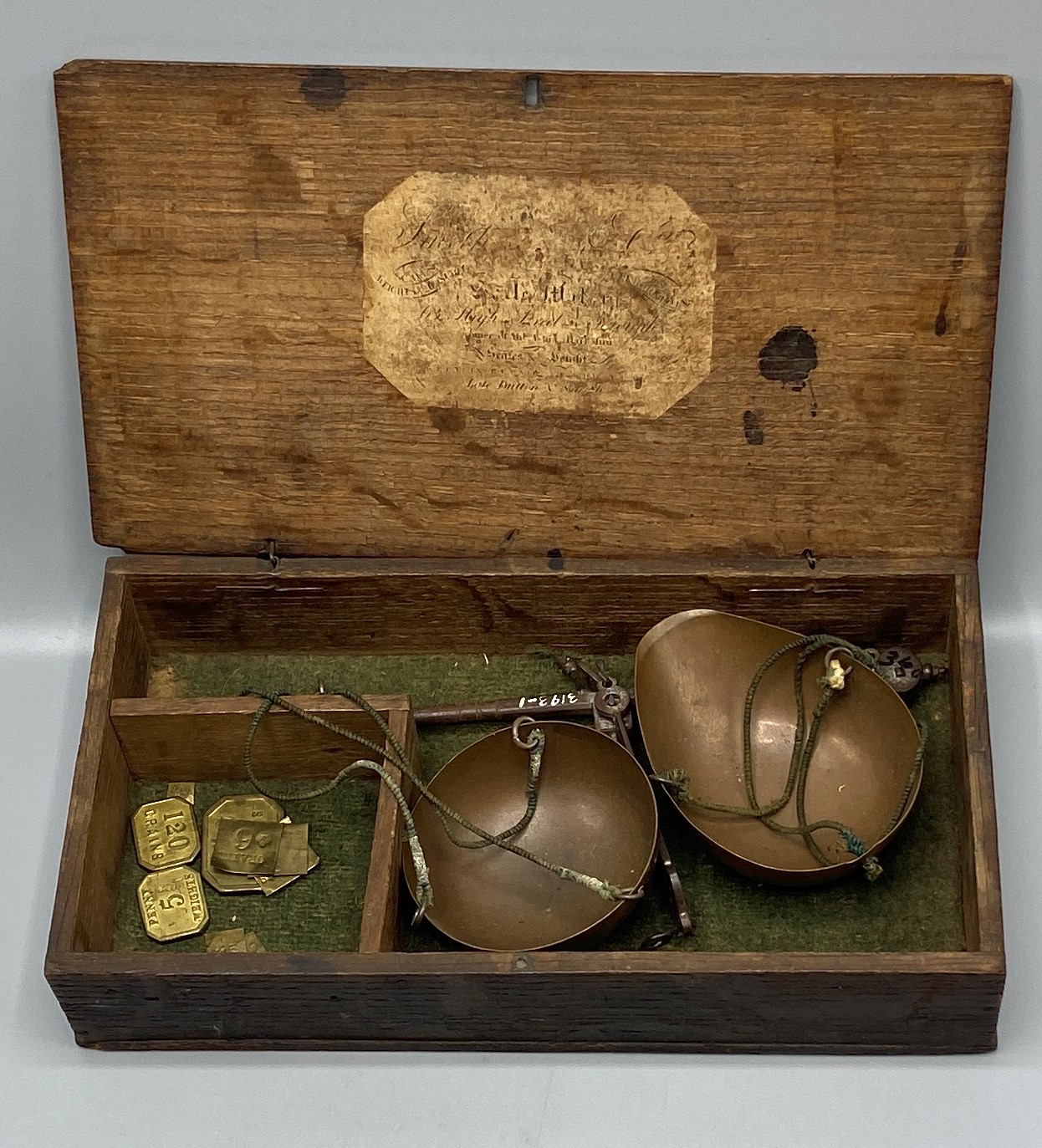
A beam scale box with iron latch; hinges are twisted iron; green felt lining; two copper trays tied to beam by string/cord. Inside lid has maker’s label which has faded; lock is missing; markings on weights and copper pans.
History
HISTORY: “These particular type scales have equal arms with trays, (also known as a pany or bucket) hanging below the beam, on cords, chains or rods. Weighing is achieved by placing known weights in one pan to balance the load in the other pan, and is correct when the beam is horizontal. The vast majority of these scales are very similar, although they in size from 50mm to over 3m in beam length (2″ to over 9ft).” (www.scales-and-weights.com)

“Scale making only became a specialist activity in the eighteenth century…Before that time it was the province of the silversmith, pewterer, clockmaker, or blacksmith. So many medicinal recipes of the eighteenth and nineteenth century called for accurate weighing that scales of this type are those most often found, the scale pans being silver, pewter, brass, copper, or glass, and either round or scoop-shaped.” (Bennion, p.285)

It was a common pratice for phyicians at this time to carry their own set of weighing scales with them. These had many uses ranging from the pharmaceutical to the practice of weighing their fee before leaving the patient’s side. They often came in a small folding case or box and were either held in the hand for weighing or hung from a metal stand.
Credit Line
Gift of Dr. John Monroe