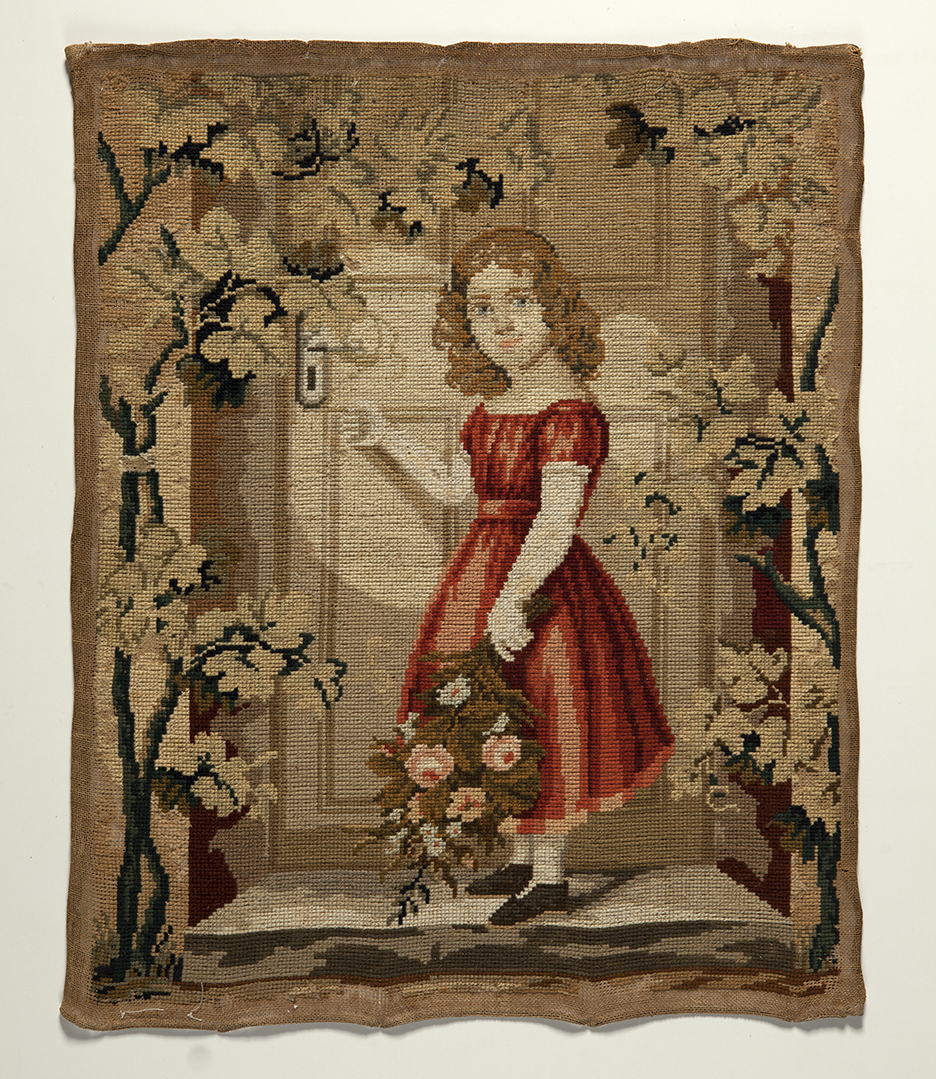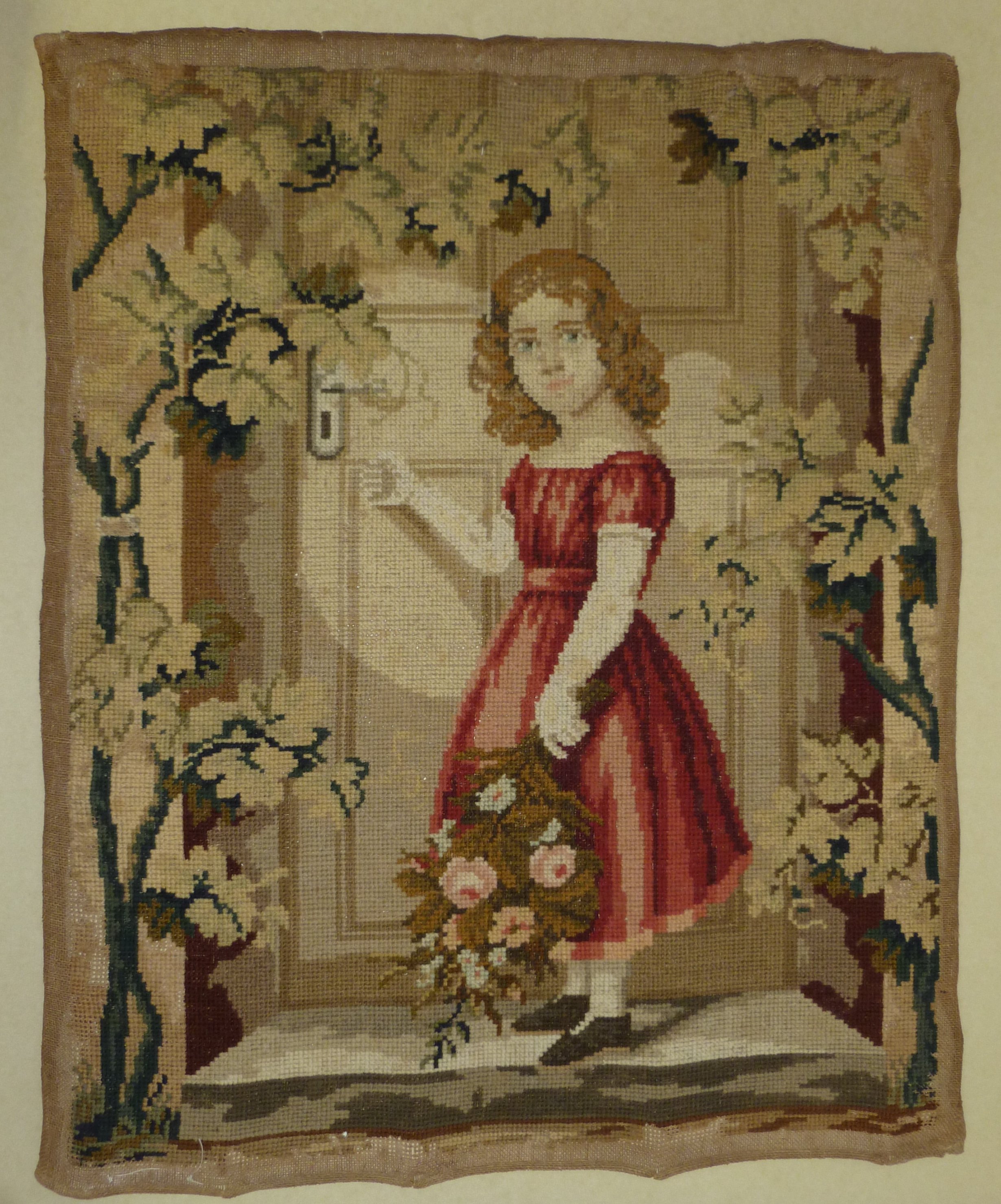

Berlin Work Picture
Framed; HOA 23 1/4; WOA 19 1/4; DOA 7/8
DESCRIPTION: Needlework picture of girl in red dress standing at a door framed in vines, holding a bouquet of flowers in left hand. Has been taken out of frame, but frame is poplar with a black finish. Original frame was black finished poplar.
BERLIN WORK: In an April 11, 1836, letter from J.J. Whitney, a Boston merchant from whom Jacobson wished to purchase needlework supplies for the school, to Jacobson, Whitney writes, “A letter from you requesting us to inform you if we sell English and German worsteds &c &c is at hand. I do deel [sic] quite largely in many articles of the kind used in embroidery &c. The English worsted we always have a large quanitity on hand as well as the fine German or Ladies Zephyr….Rug and Marking canvass[sic]–patterns for worsted work &c we always have on hand and sell them at as low prices as any one as we import them ourselves….In Philadelphia animals and birds are almost the only designs used for working in worsteds, while with us it is impossible to see anything but flower pieces.” (A transcription of this letter is in the “Needlework” subject file of the Wachovia Area Residents card file in the Thomas A. Gray Library, Old Salem Museums & Gardens).
Berlin work developed in Germany in the early 19th century. Printed patterns for brightly colored wools, or “worsteds”, were widely distributed and commercially available by the 1820’s. Patterns were printed on “point”, or graph, paper with colored blocks corresponding to squares on the canvas. The stitcher had only to follow the graph and count lines, squares, and stitches to create colorful elaborate designs. The most popular patterns included wreaths, bouquets of flowers, animals, patterns for shoes, and pictorials.
By the 1840’s, the rage for Berlin work had replaced the preference for elaborate silk on silk techniques that had been popular in Salem Girls’ Boarding School suggesting that teachers and students alike embraced this popular needlework technique to create a variety of personal accessories, household objects, and pictures.