Canterbury
Artist/Maker
Petersen, Karsten (attrib.)
Place Made
Piedmont, North Carolina
Date Made
DATE MADE: c. 1815-1820
Medium
walnut and poplar
Dimensions
HOA 17-13/16″; WOA 12-1/16″; DOA 21-1/16″
Accession Number
3711
Description
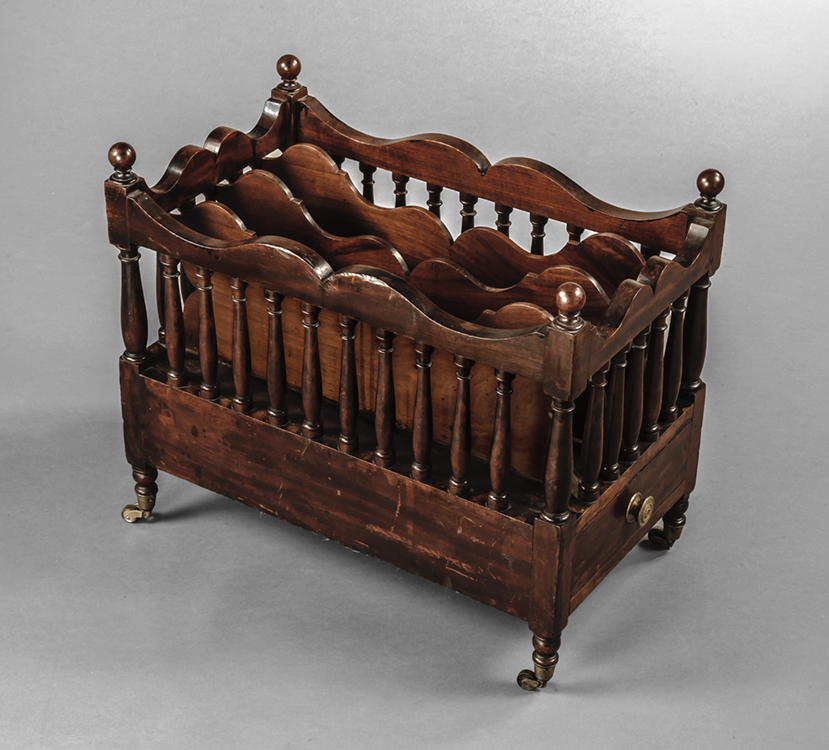
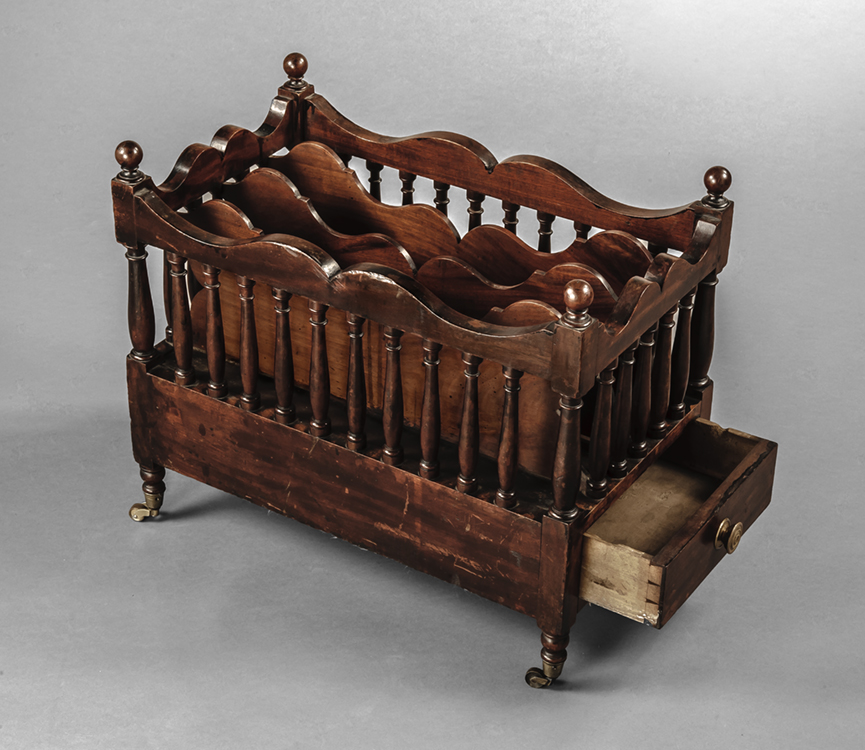
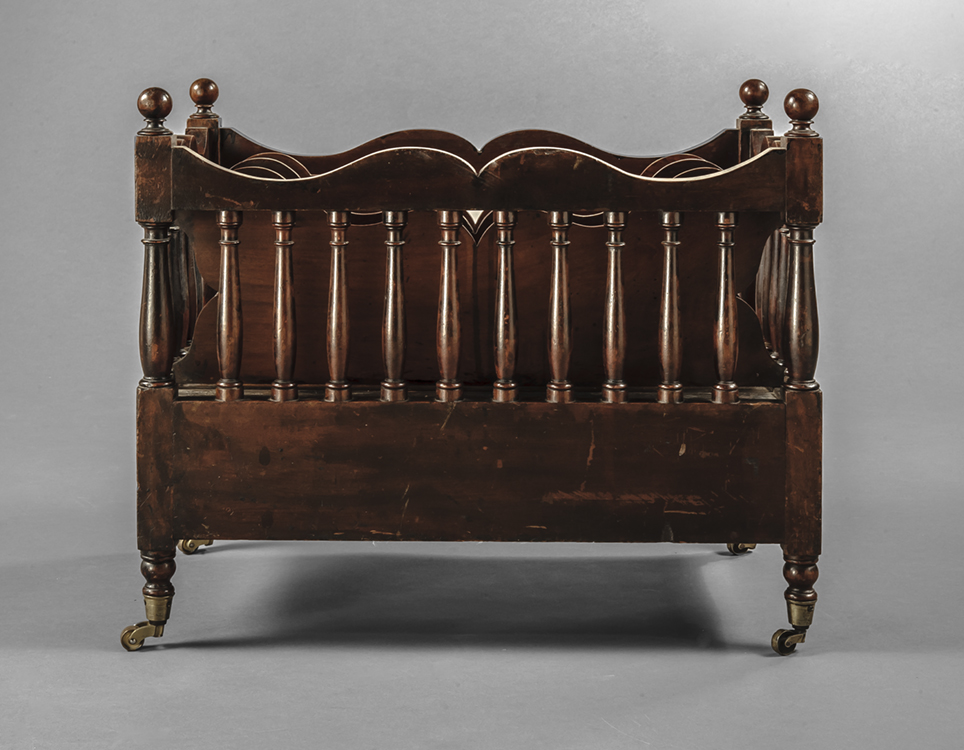
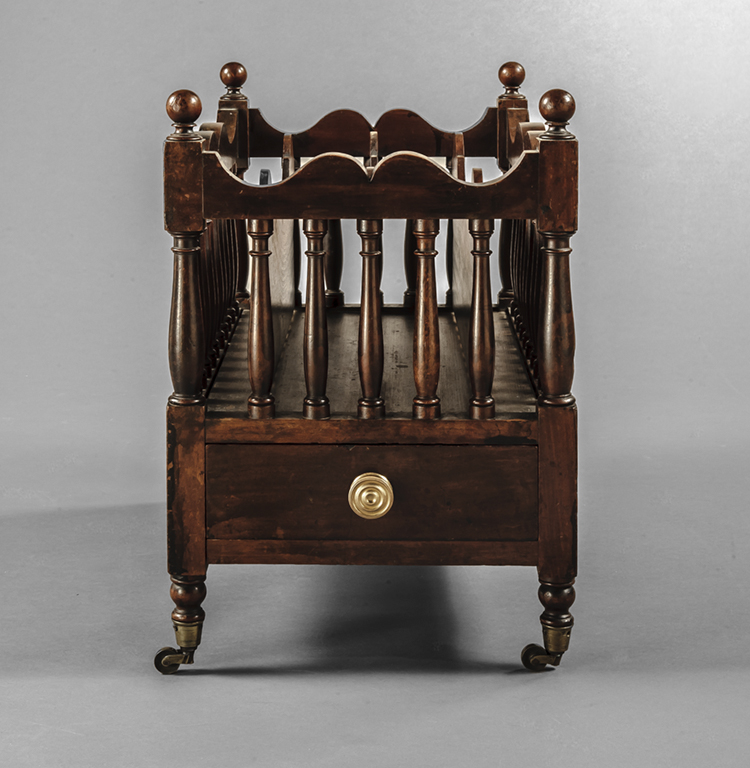
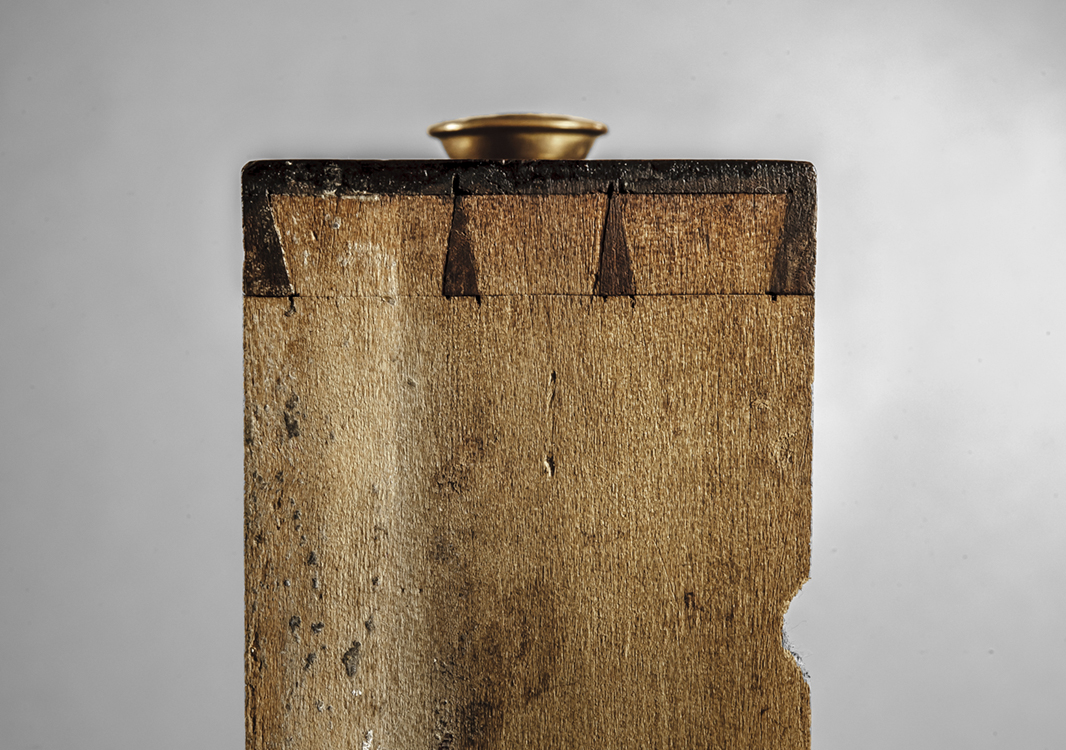
DESCRIPTION: Music canterbury with turned baluster frame, scalloped edge, turned ball finials, and four brass casters. The legs have ball turnings followed by the casters. Having a drawer with brass round pull knob. Made of walnut with poplar drawer interior.
History
HISTORY: This piece was purchased in Bethania, North Carolina.
TERM: The term “Canterbury Music Case” was given to such stands in the 1817 edition of the New York price book. Thomas Sheraton aludes to the story that the name comes from the town of Canterbury in Kent, where the bishop of that see first gave orders for such pieces. Sheraton further suggests castors which adapted the stand “to run in under the piano-forte.”
STYLE: The turned baluster frame and the side- rather than end-mounted drawer and the unusually low legs are unusual. Other examples have a much lighter construction; the balusters here require heavier than normal rails. Purchased at a Bethania, North Carolina estate sale.
Artist Biography
ARTIST BIO: Karsten Petersen was born in Wichkrug by Flensburg, Schelswig-Holstein, Prussia on April 21, 1776. Although little is known of his background or training, evidence suggests that he may have lived in Denmark for several years. In 1806, he immigrated to Salem from Gnadau via Bethlehem, Pennsylvania. After a brief period in Salem during which Petersen worked in the Single Brothers’ joiner shop and studied English, he and Johann Christian Burkhardt traveled to Georgia to work as craftsmen among the Creek Indians on the Flint River. Petersen and Burkhardt returned to Salem in 1813 and Petersen set up first a turner shop and later a cabinetmaking shop on what had formerly been the Brother’ slaughter house lot. In 1816, Petersen married Suzanna Praezel. They had five children. Their two sons, William and Edward trained in their father’s shop and took the shop over when Petersen died in 1858.
Credit Line
MESDA Purchase Fund