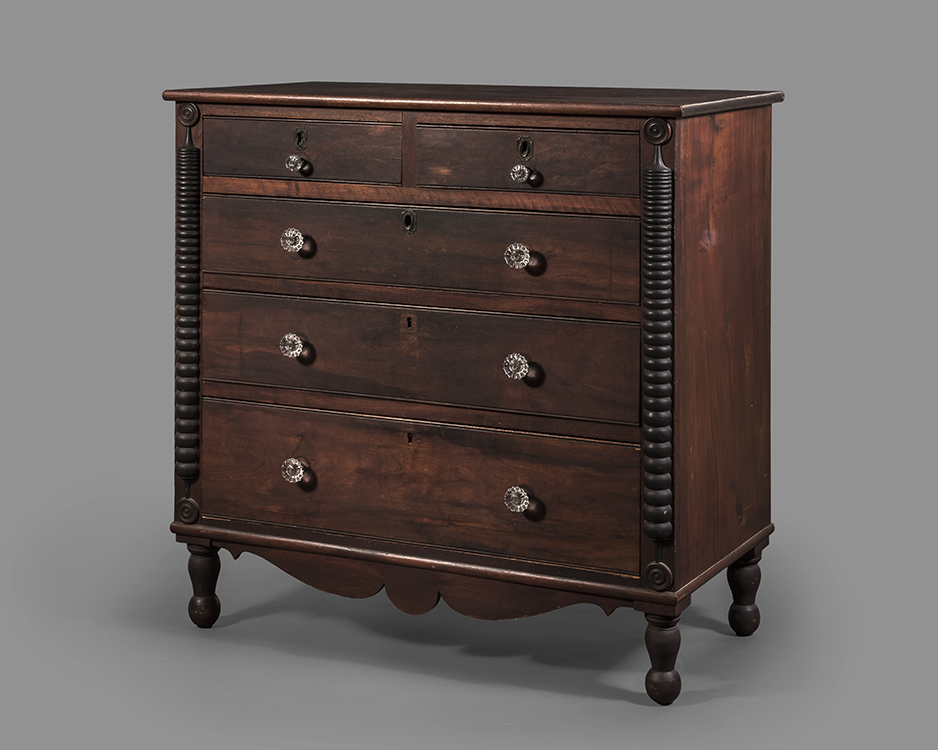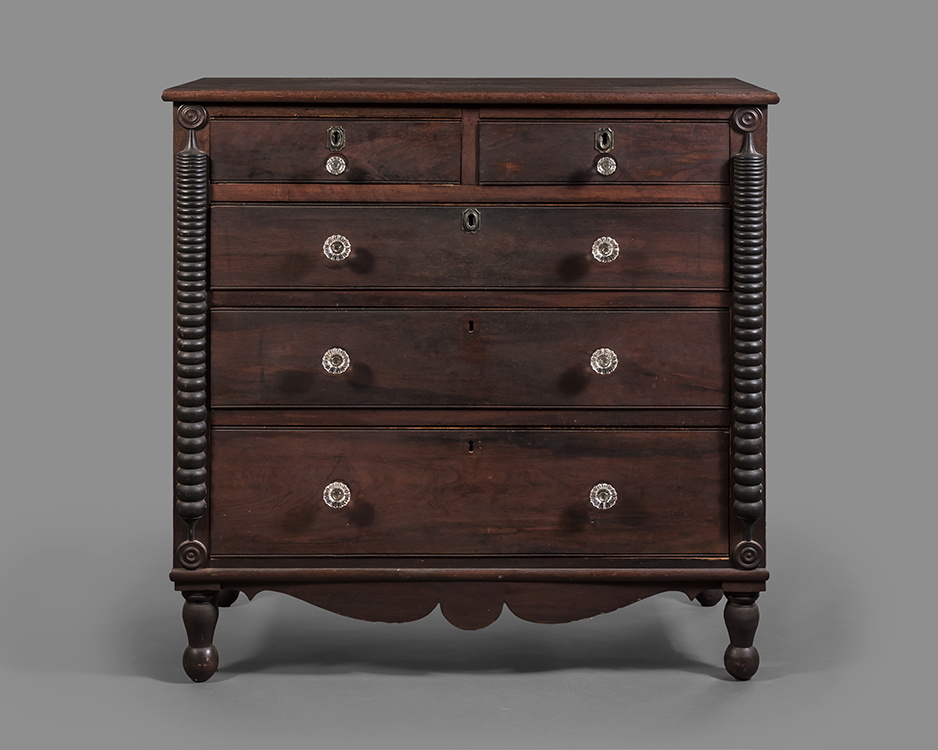
Chest of Drawers
Artist/Maker
Petersen, Karsten
Date Made
1825-1845
Medium
walnut and poplar & yellow pine
Accession Number
5906
Description
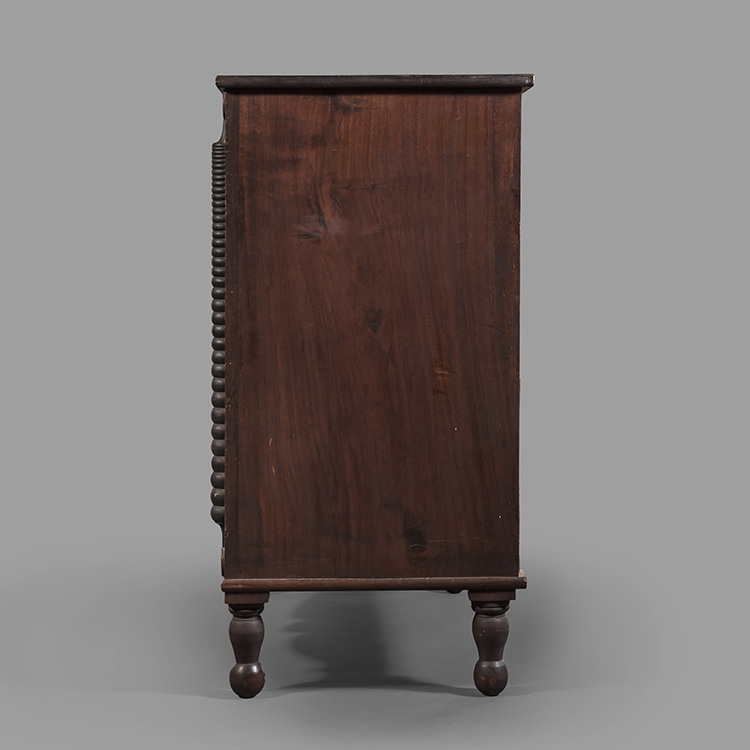
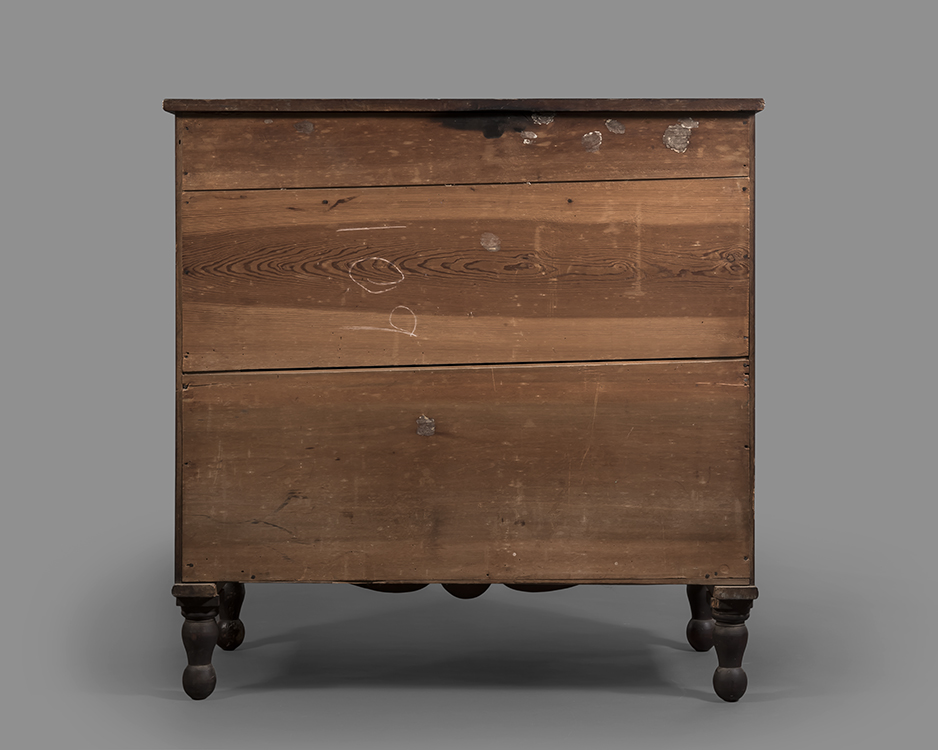
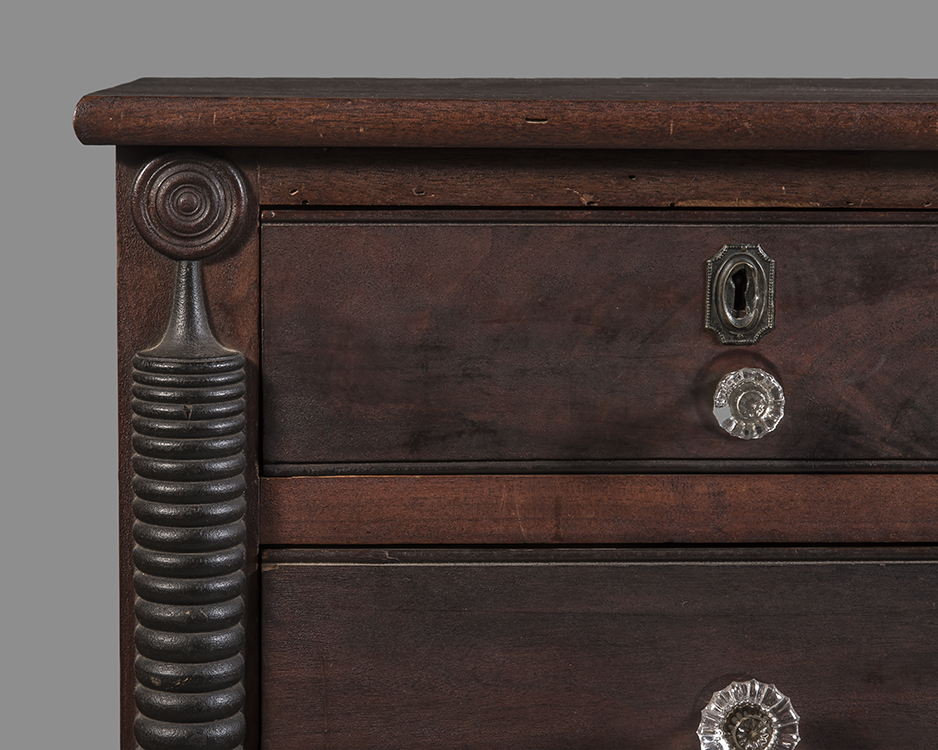
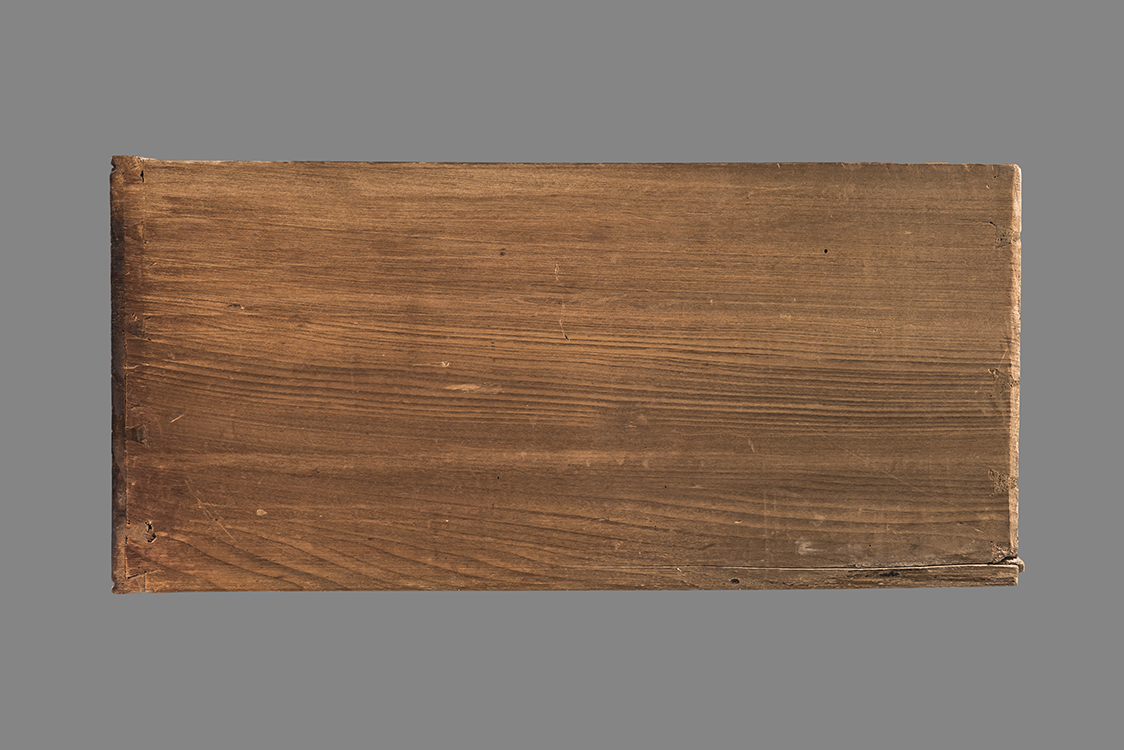
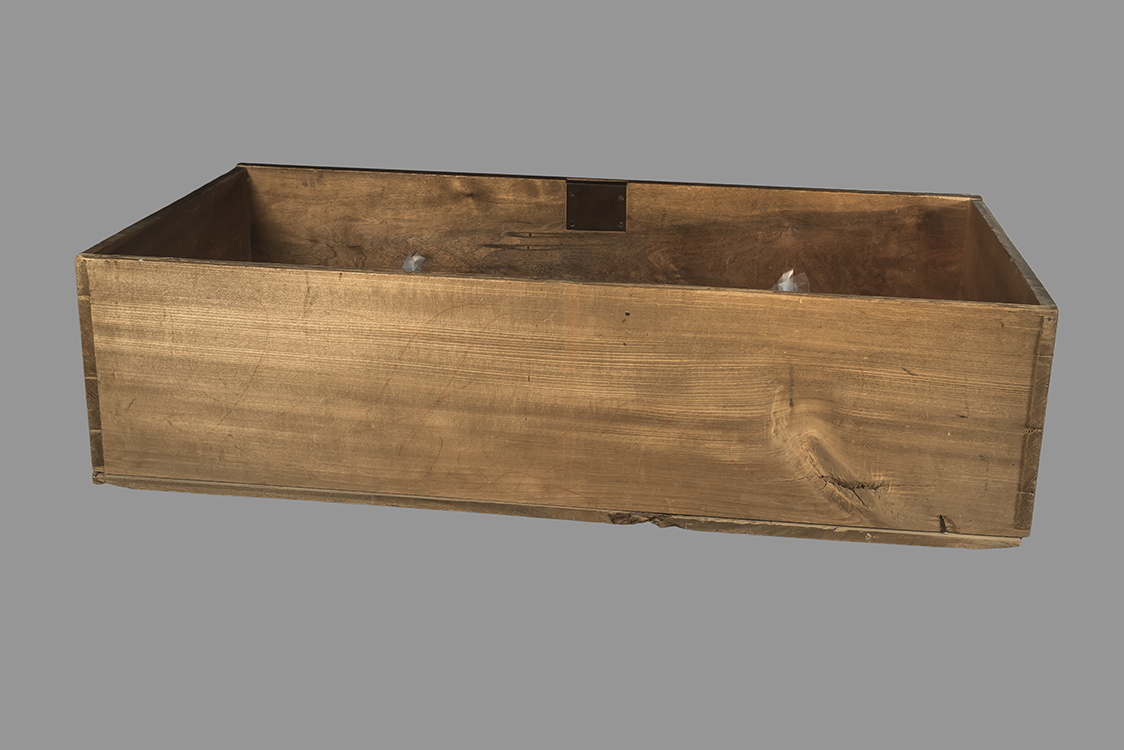
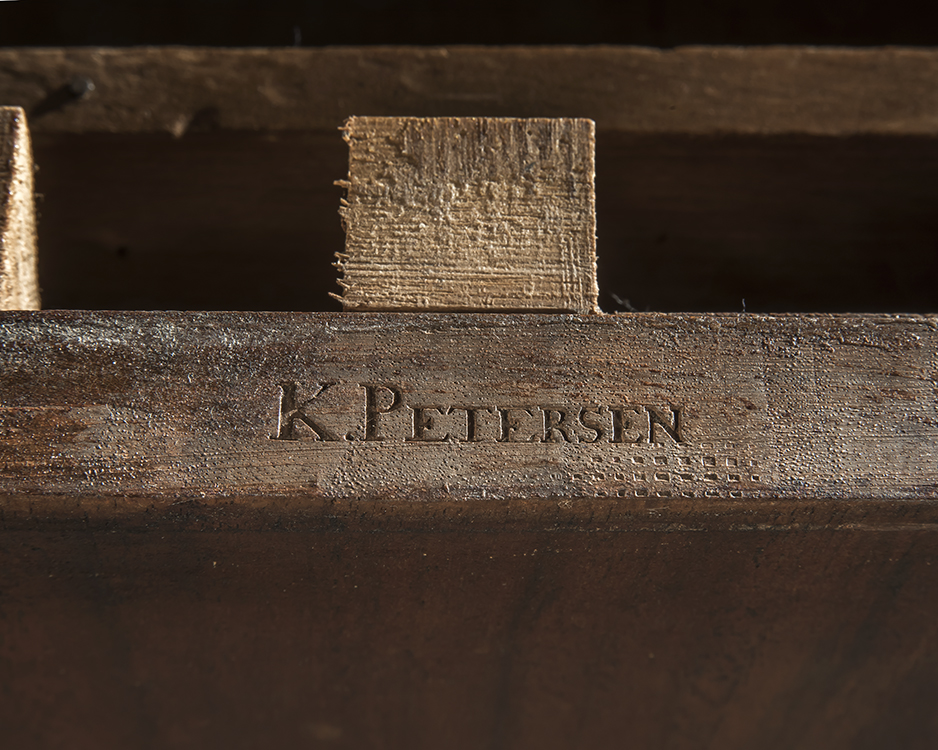
DESCRIPTION: Chest of Drawers with two small drawers side by side over three graduated drawers stacked below, all with glass knobs (replaced); each drawer is beaded along top and bottom edges and each has a lock; top three drawers have stamped brass escutcheons (now missing from two bottom drawers); front case On either side of drawer stack) decorated with split spindles with graduated turnings terminating at the top at bottom with turned disks; finish is degraded but looks as though the chest was originally shellacked; split spindles and feet possibly ebonized; all four feet are turned; shaped skirt below slightly rounded bedmolding; bottom of chest is full dustboard; other drawers rest on frames; back composed of horizonal boards nailed on; top has rounded edges and is dovetailed on and slid into place from the front; stamped signature is below front portion of top (now loose due to failed glur block; stamp used to sign chest is the same as the one used to make tools from the shop; drawers have chamfered bottom edges (on three sides) which slide into rabbeted sides with back of drawer bottom extending beyond the drawer back slightly; drawer bottom nailed at the back; drawers are dovetailed front and back . Primary wood is walnut with poplar and yellow pine used as secondary woods.
The surviving account book from the Petersen Shop includes the same of many chest of drawers some with bookcases and some without. The aveage cost of a “Bouro” without a bookcase was $15.00.
Artist Biography
ARTIST BIO: Karsten Petersen was born in Wichkrug by Flensburg, Schelswig-Holstein, Prussia on April 21, 1776. Although little is known of his background or training, evidence suggests that he may have lived in Denmark for several years. In 1806, he immigrated to Salem from Gnadau via Bethlehem, Pennsylvania. After a brief period in Salem during which Petersen worked in the Single Brothers’ joiner shop and studied English, he and Johann Christian Burkhardt traveled to Georgia to work as craftsmen among the Creek Indians on the Flint River. Petersen and Burkhardt returned to Salem in 1813 and Petersen set up first a turner shop and later a cabinetmaking shop on what had formerly been the Brother’ slaughter house lot. In 1816, Petersen married Suzanna Praezel. They had five children. Their two sons, William and Edward trained in their father’s shop and took the shop over when Petersen died in 1858.
Credit Line
Frank and Carol Holcomb Purchase Fund. Acquired from the Collection of Mickey and Beverly Angell.