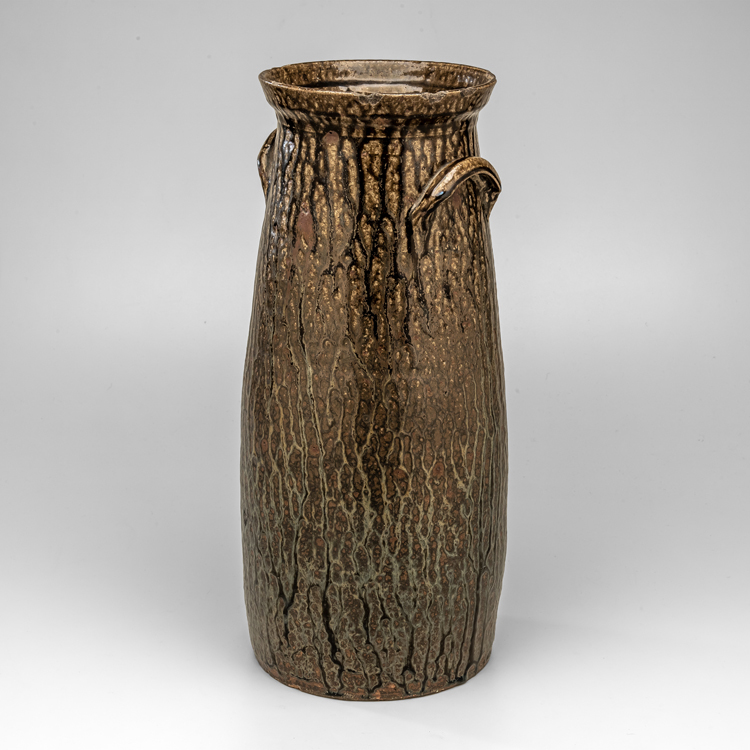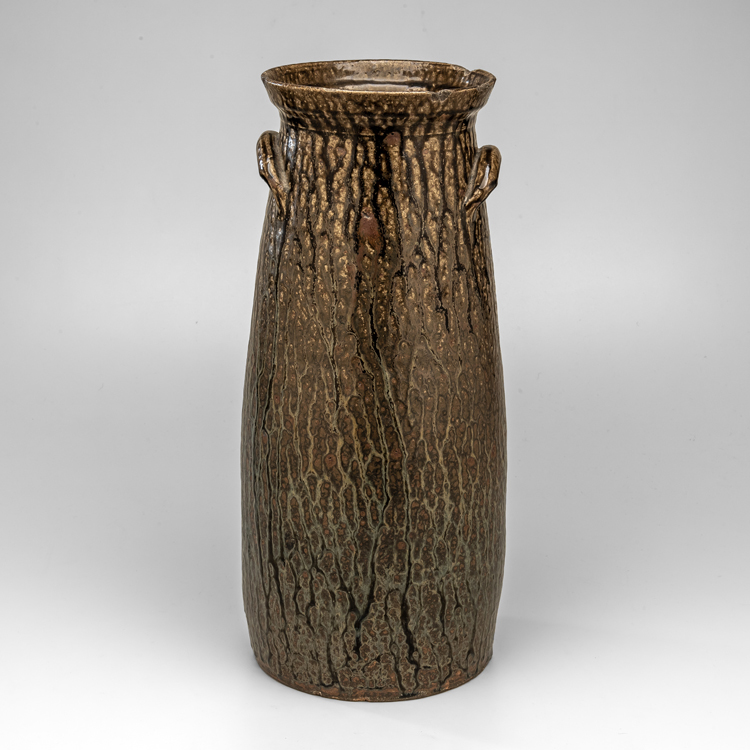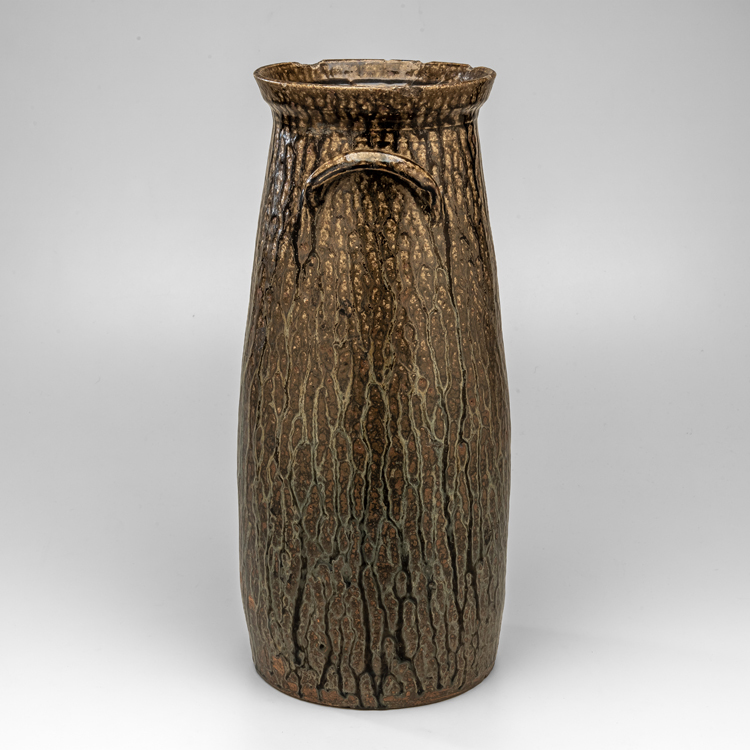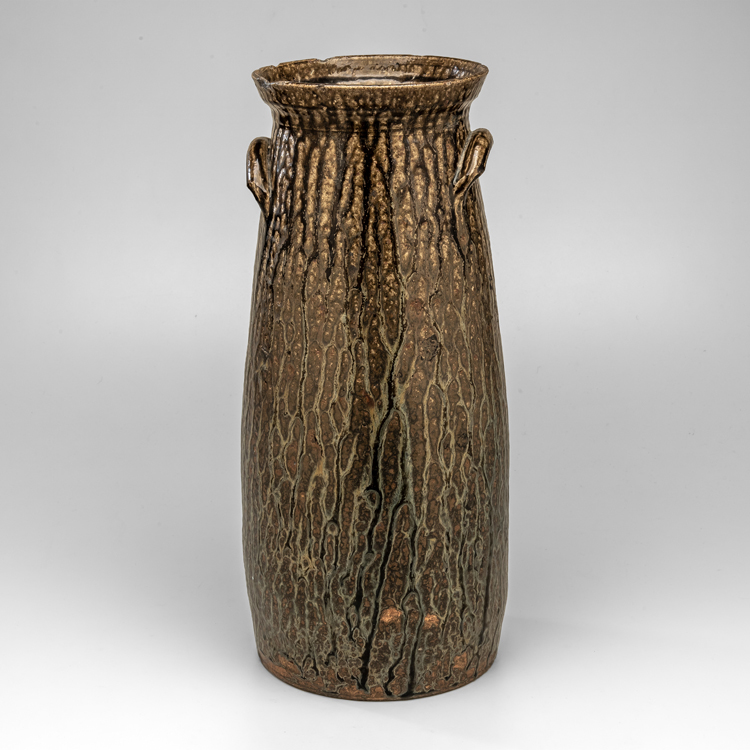
Churn
STYLE
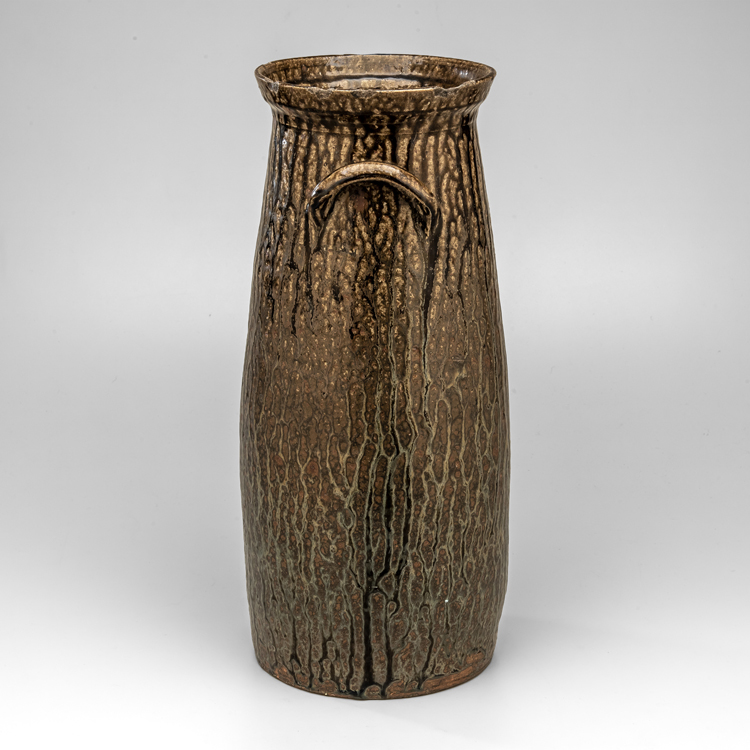
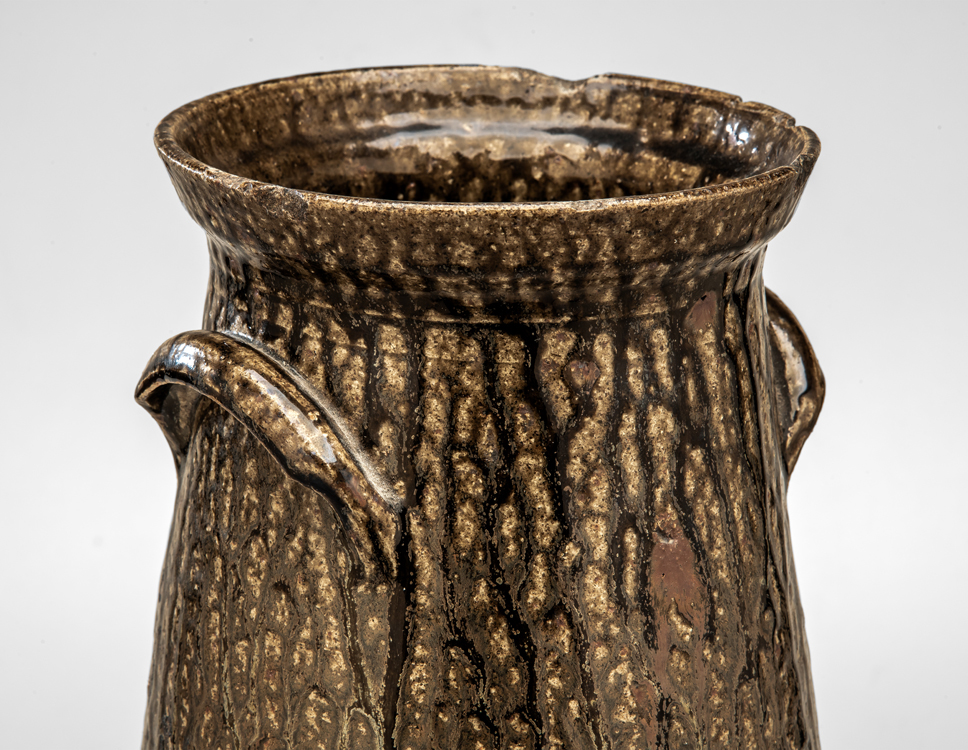
The thick, syrupy rivers of green and brown glaze on this churn had humble beginnings: a heap of ash left from burning wood, sand from a riverbank, and clay dug from the earth. The potter mixed these together with water and carefully dipped each pot into the solution. The ash lowered themelting point of the sand. When the pot was blasted with temperatures up to 2,500 degrees Fahrenheit inside the kiln, the sand liquefied and spread across the surface, leaving glassy greenish brown trails. There are only two places in the world where this type of glaze, called “alkaline” has been extensively used: East Asia and the American South. The potters of Randolph County, Alabama were closely linked with makers in Edgefield, South Carolina, the epicenter of America’s alkaline glaze tradition. Towards the center of the state, and especially in the mountains, another type of alkaline glaze was used. Derived from limestone, lime-based alkaline glazes tend to create a more uniform light green or tan surfaces.