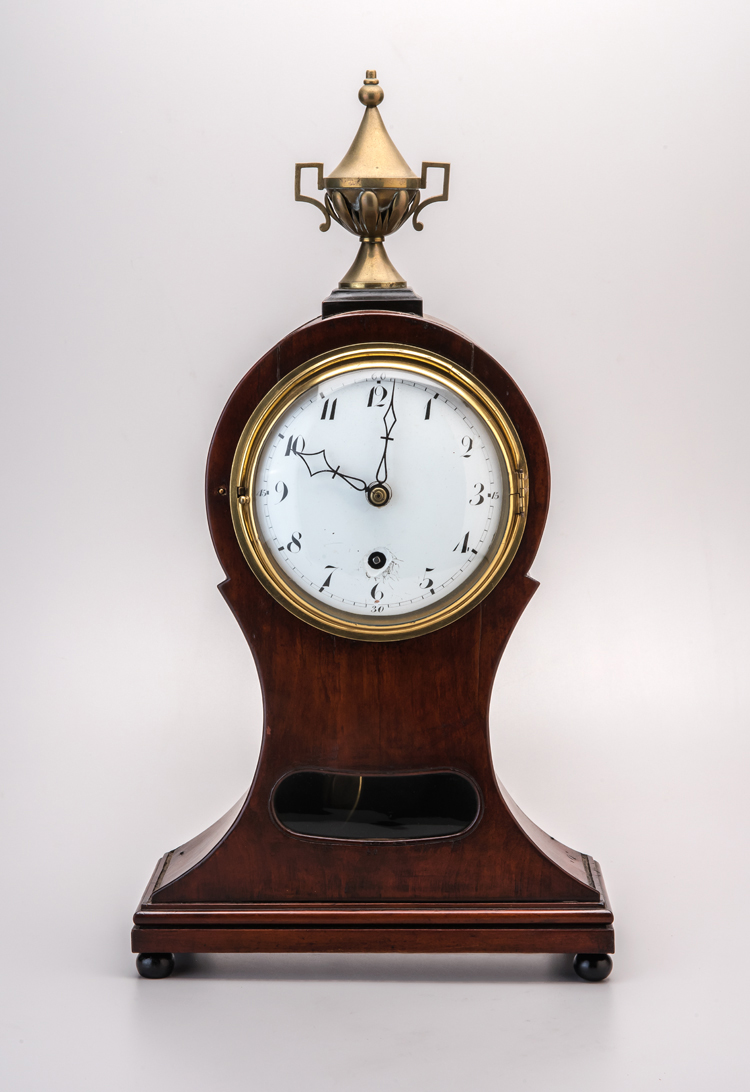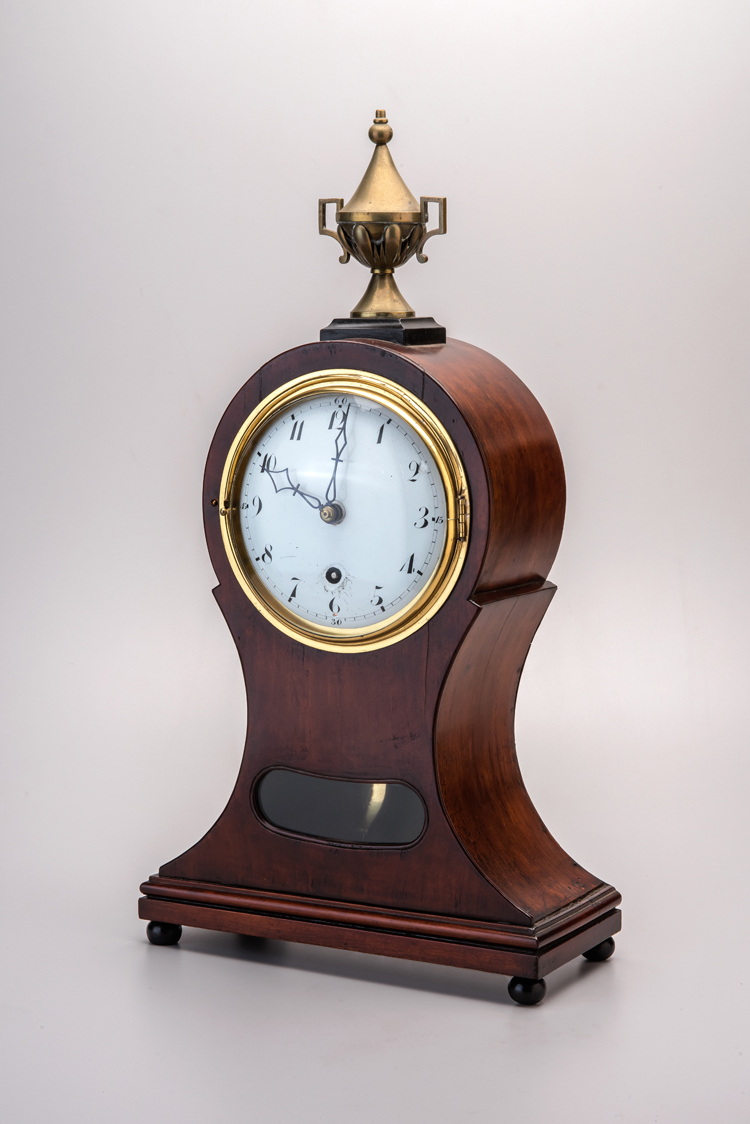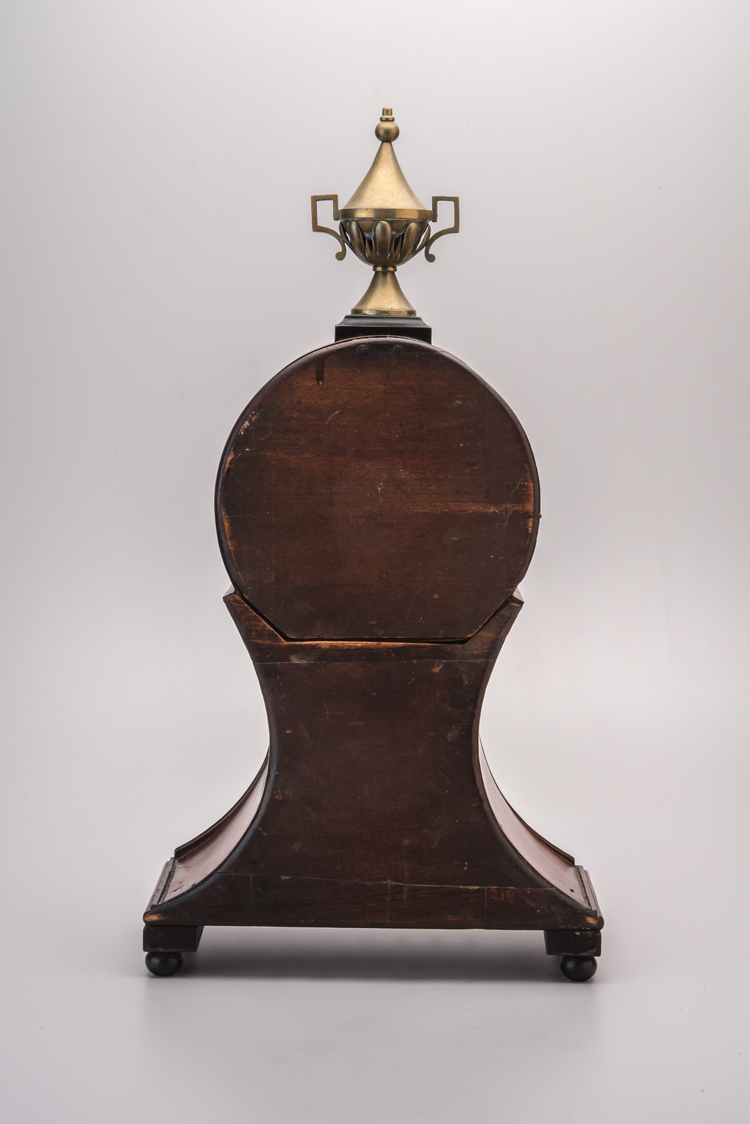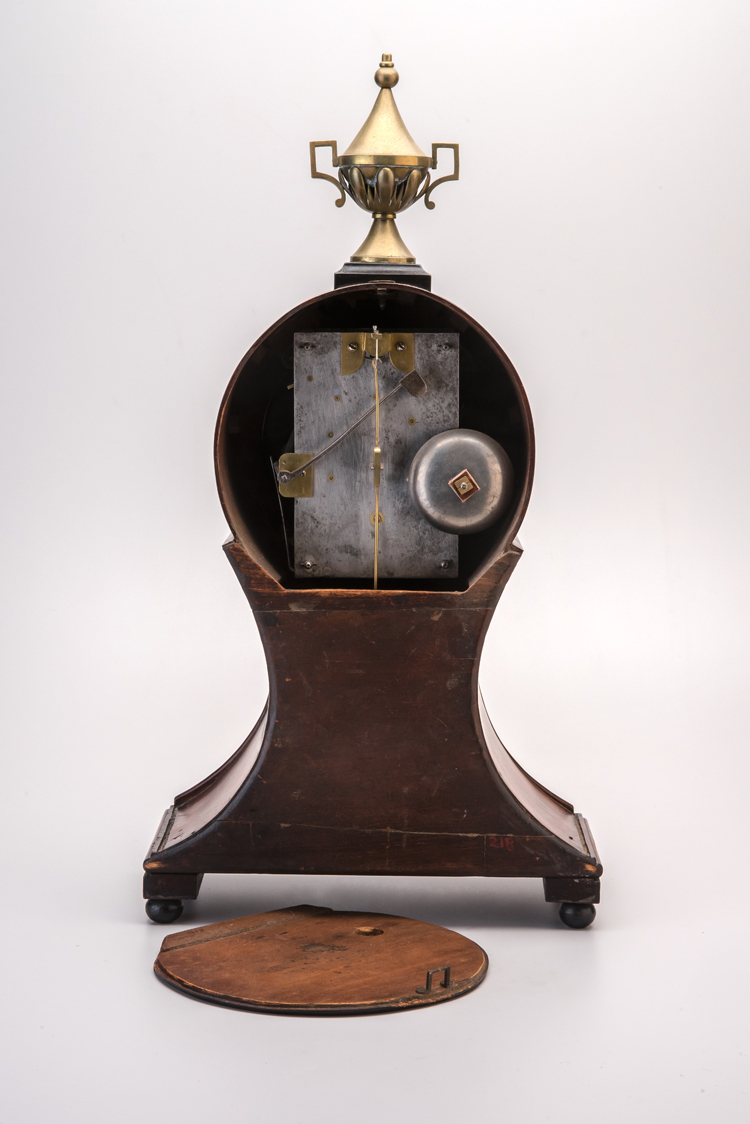
Mantle clock
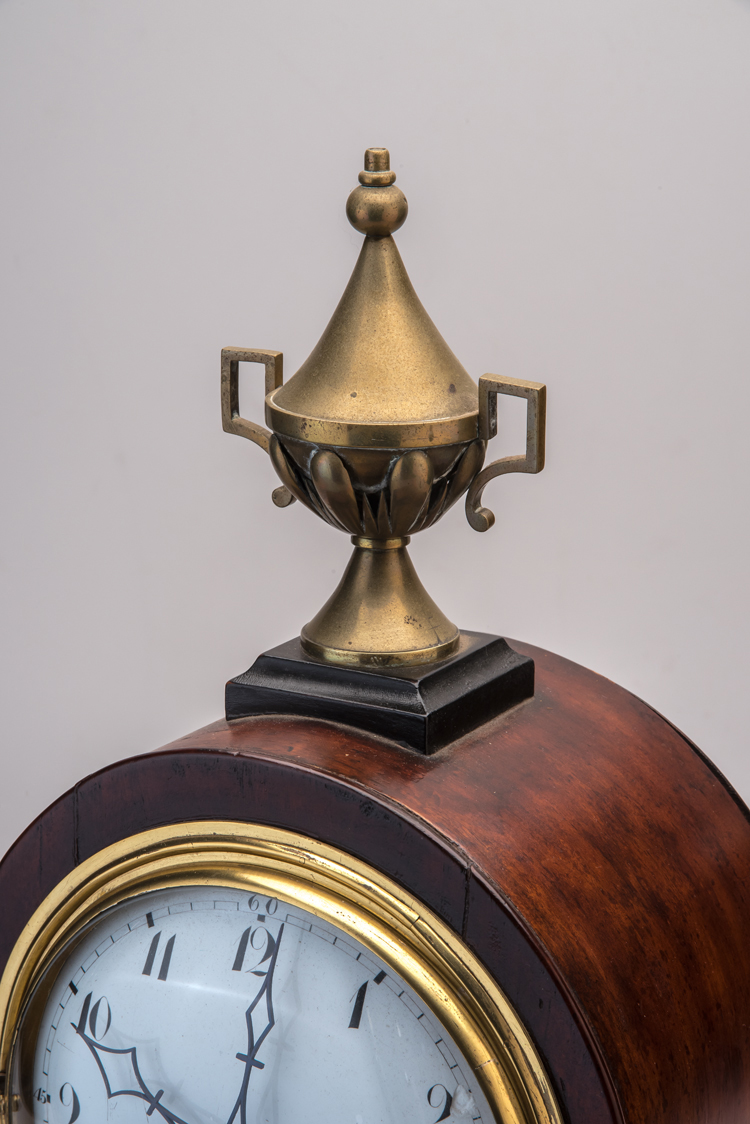
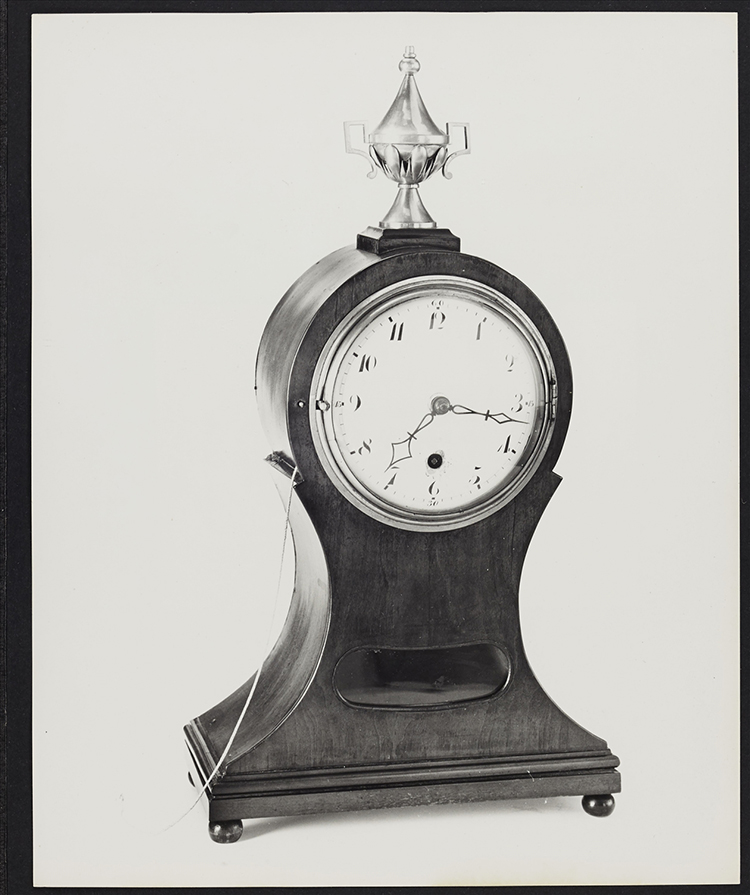
One of only two known mantle clocks by Eberhardt, this example is spring driven; therefore, there are no weights. The overall design and brass finial were influenced by the English “ballon” clocks of the period. The string could be pulled during the night to repeat the last number of full hours that had passed–this has lead to the erroneous labeling of this clock as a “repeater.” In fact, virtually all of the known Salem clocks have this feature (which is concealed in the case). It has an eight-day movement, circa 1835.
INSCRIPTION: The name “Stoltz” is scratched on the backboard. The name probably refers to an owner and could have been any one of several Stoltzes who lived in the area during the nineteenth century.
MAKER: Ludwig Eberhardt was one of Salem’s most interesting and cantankerous individuals. Arriving from Germany in 1799 (where he had mastered the art of clockmaking under his father), Eberhardt soon had a reputation as a gifted artisan with an inability to handle alcohol and money. Despite the many references in the records to his bad conduct, the Church apparently felt that he was important enough to the town to put up with him. A large number of tall case clocks attributed to Eberhardt have survived, attesting to his skill. See Frank P. Albright, “Johann Ludwig Eberhardt and His Salem Clocks (Chapel Hill: University of North Carolina, 1978).
Edward Ackermann is a possible maker of clock case.