
Odometer
Artist/Maker
Eberhardt, Johann Ludwig (attr.)
Place Made
Salem North Carolina United States of America
Date Made
1835
Medium
brass –wrought iron –maple –walnut
Dimensions
Box: HOA 6 1/2; WOA 5 1/2; DOA 4 1/2
Accession Number
C-11
Description
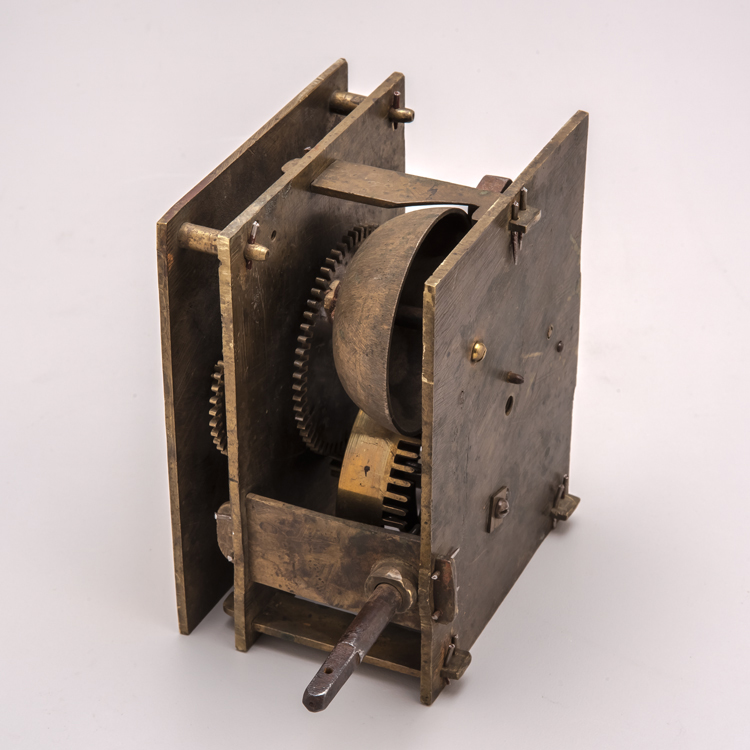
In writing about this object, scholar Frank Albright notes, “The Odometer was attached to a carriage and geared to a wheel in such a manner as to measure the distance in miles….Such an odometer seems to …have come into general use, about 1800.” Albright goes on to say, “Eberhardt’s 1835 inventory lists an odometer for $15.00.” (Albright, Frank P. Johann Ludwig Eberhardt and his Salem Clocks. 1978:136).
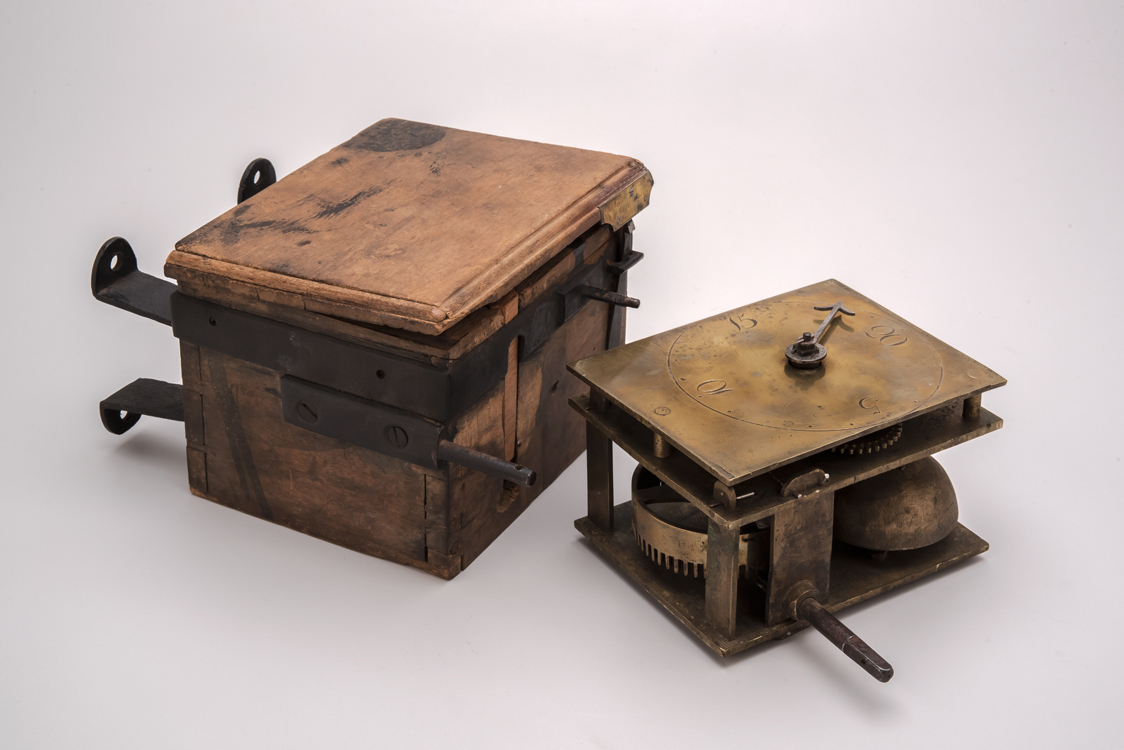
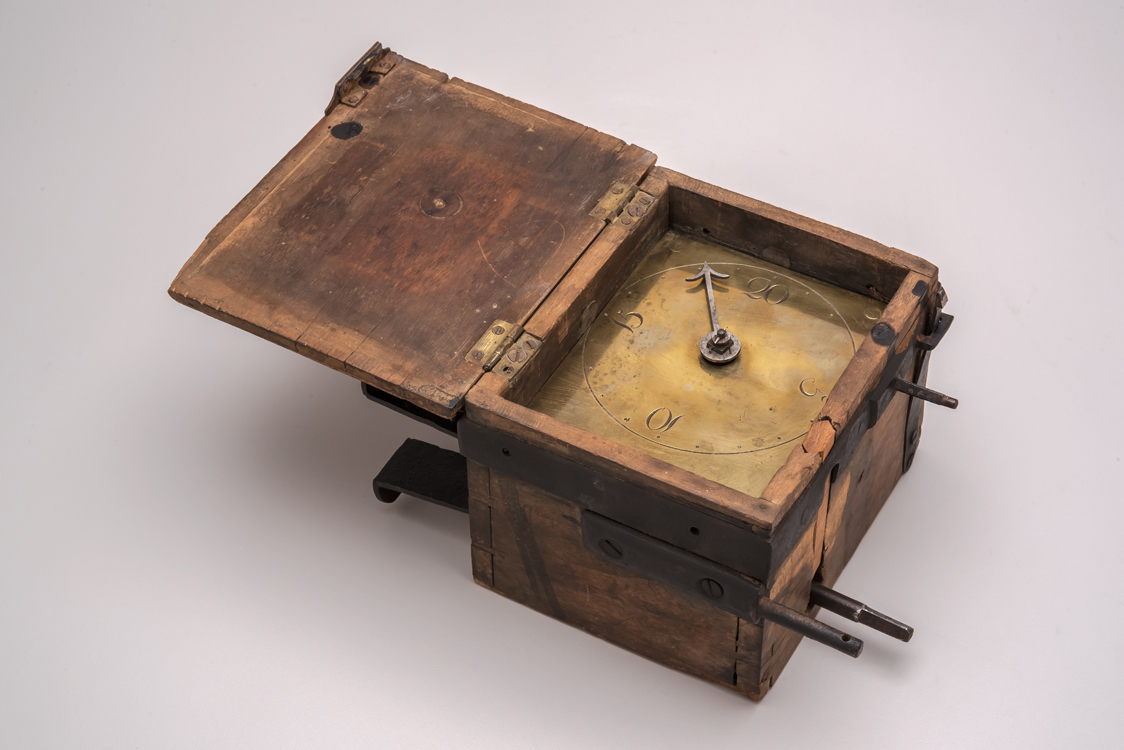
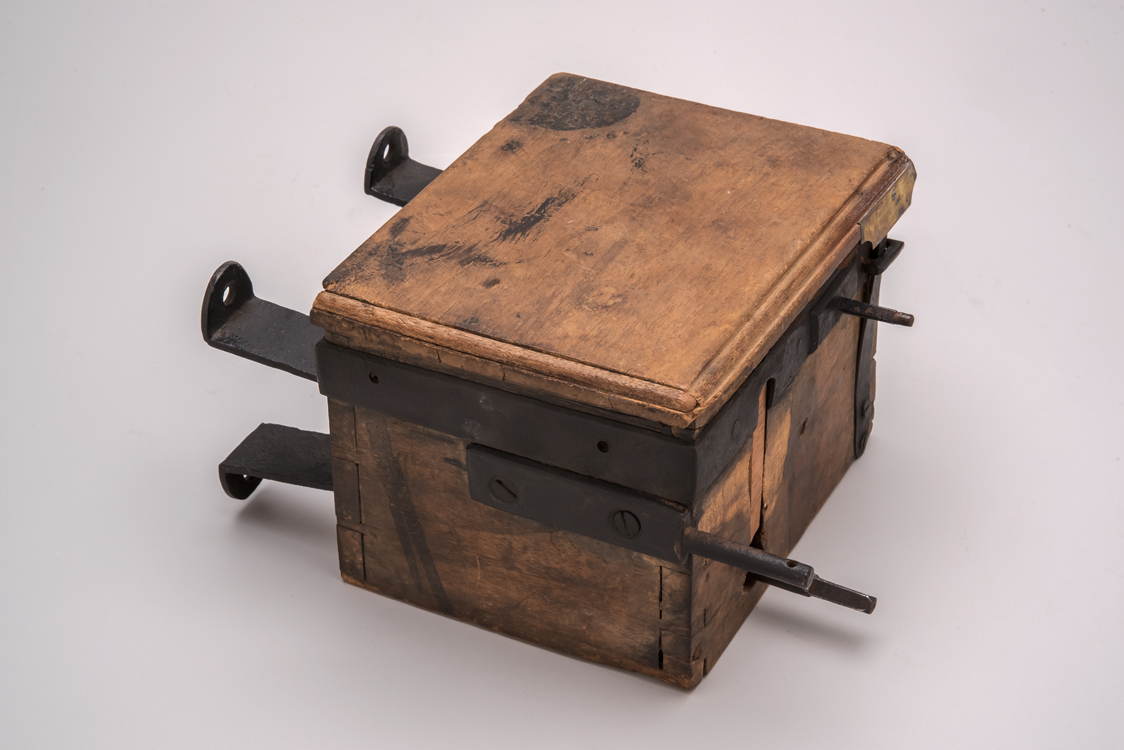
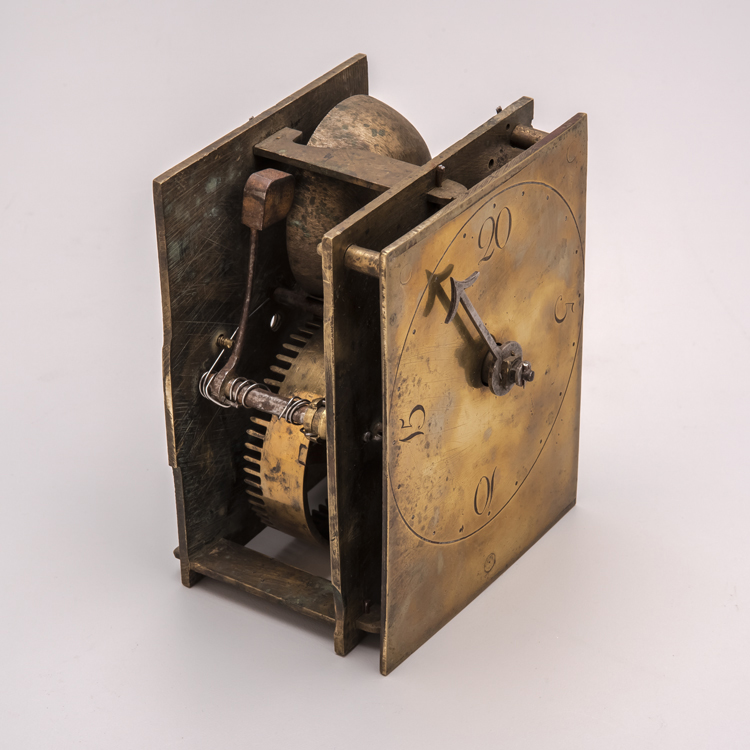
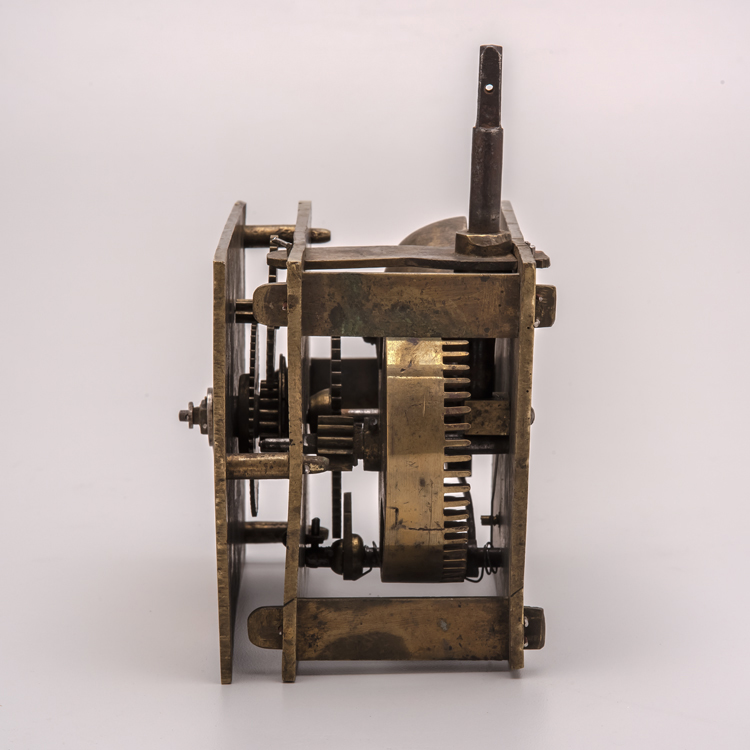
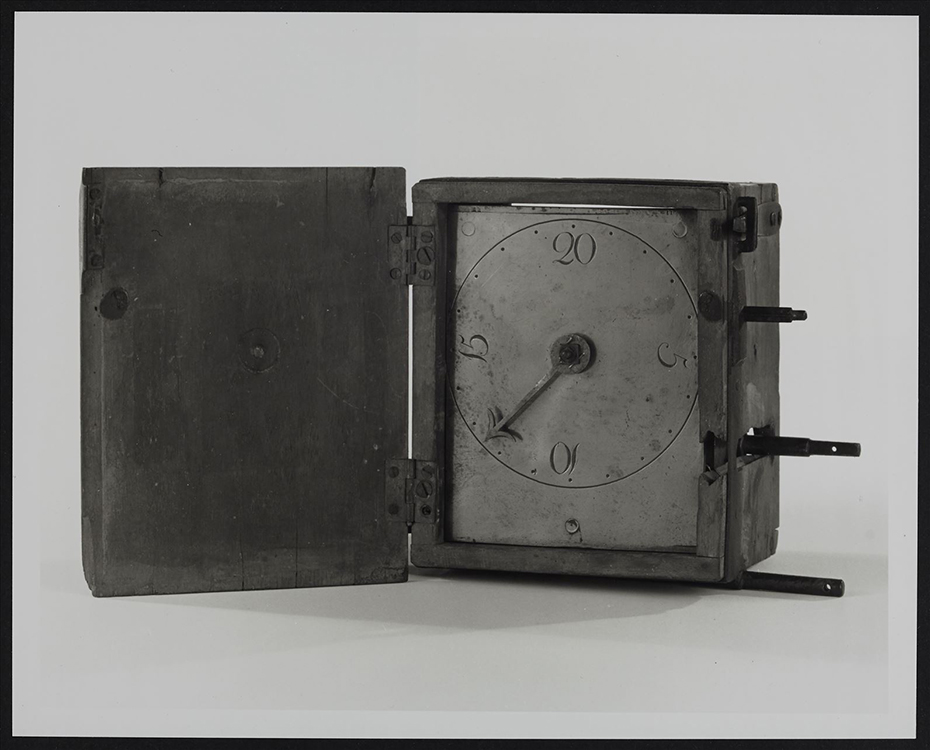
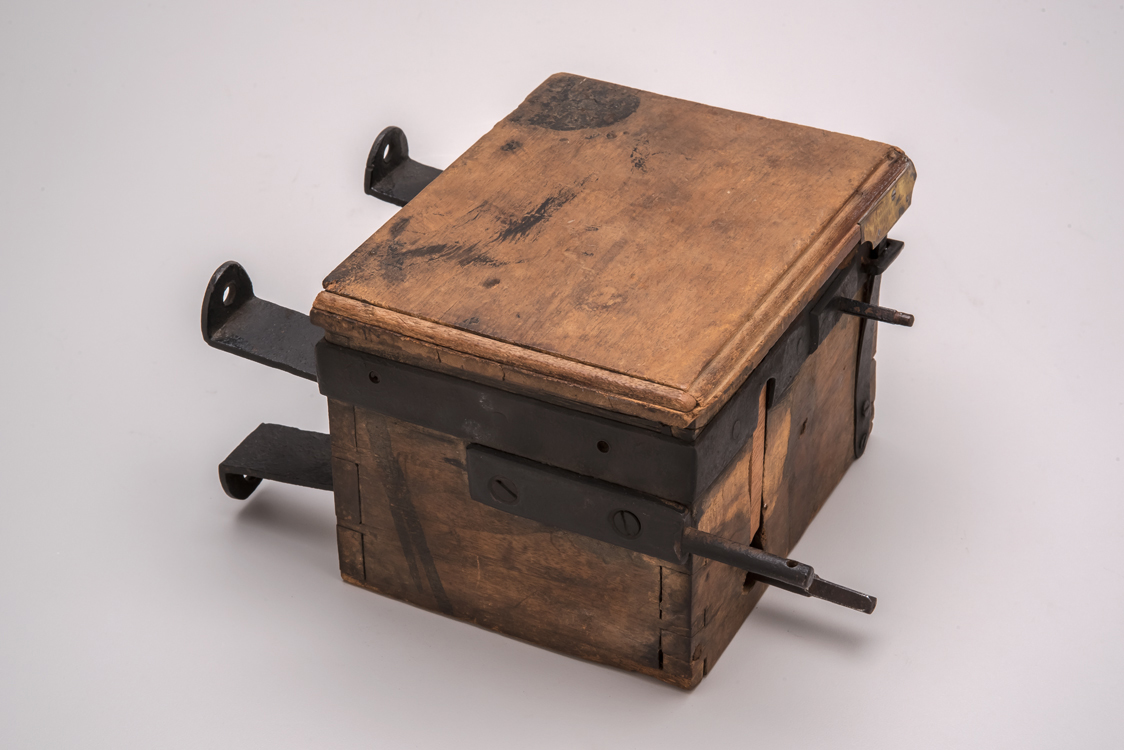
Odometer has a brass face with an engraved dial: “20” engraved at the top, “5” on the right side, “15” on the left and “10” at the bottom. The Dial is enclosed in a wooden case with an opening for a lever, hinged on one side. When attached to the wheel of a wagon or cart, this instrument records distance as the wheel revolves. Our modern speedometer developed from this device. Frank P. Albright attributes this odometer to Johann Ludwig Eberhardt due to similarities between the works of the odometer and clock works made by Eberhardt. (See Albright, Johann Ludwig Eberhardt and his Salem Clocks 1978:136-137.)
History
Odometer, possibly the one mentioned in Eberhardt’s inventory of 1835 at a value of $15.00. Cyclometer used to map out roads; when attached to the wheel of a wagon or cart, it records distance as the wheel revolves.
Artist Biography
Johann Ludwig Eberhardt, North Carolina’s most prolific clockmaker, arrived in the Moravian town of Salem from Germany in 1799 and worked there until 1837. According to an 1809 inventory of his shop, 30-hour clocks such as this sold (without case) for $30.
Credit Line
Wachovia Historical Society Collection