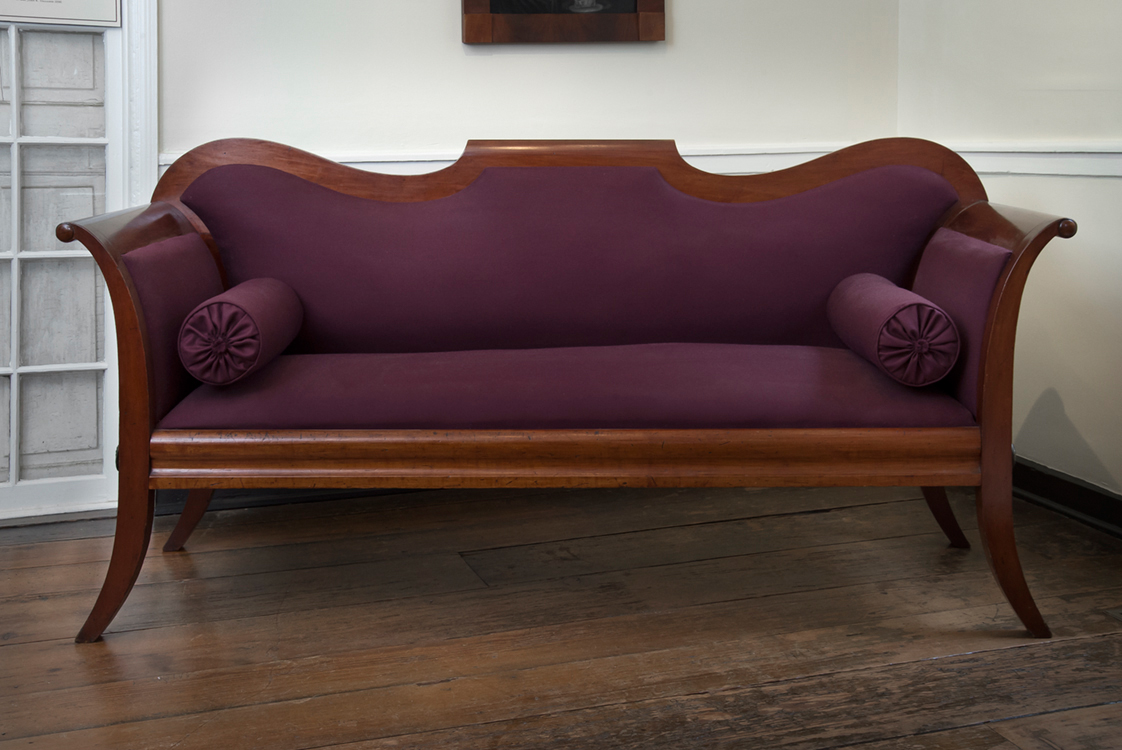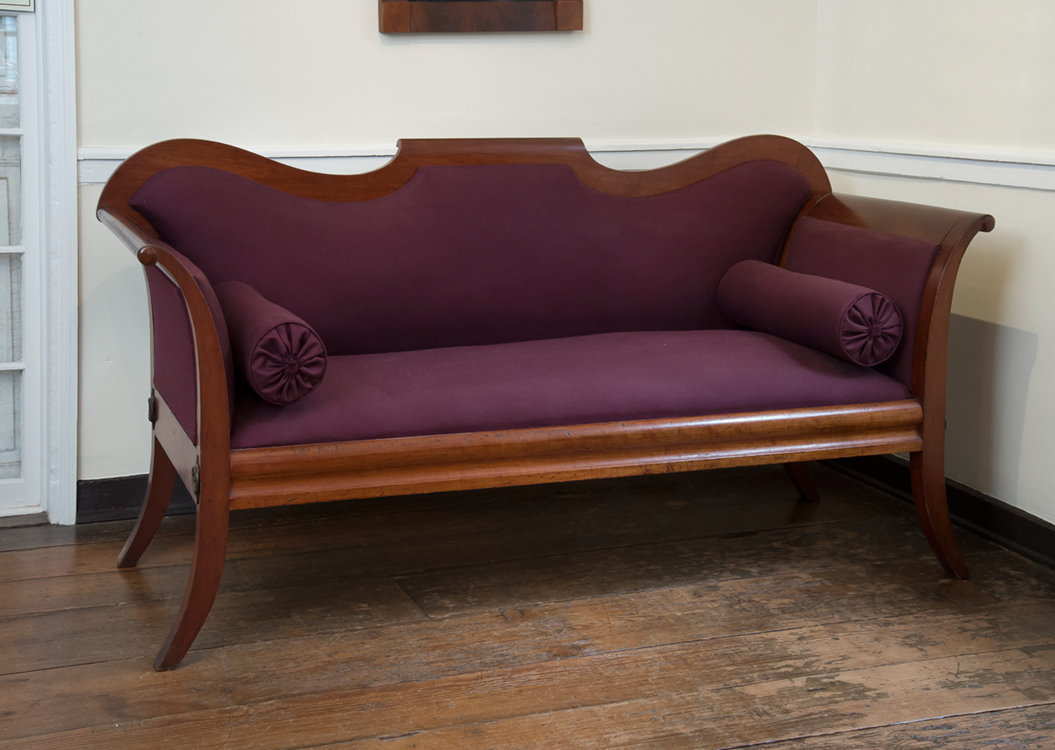
Settee
In 1827 Petersen charged one Constantin Brenner $27.00 for a sofa. The high price was in part due to the cost of the upholstery materials such as horsehair stuffing and showcloth, but it may also reflect the cost of including a new development in the application of upholstery – the use of springs in the seat to add loft and comfort. The seat of the sofa consists of a wooden box into which the maker fastened springs. Horsehair, cotton batting, and linen were secured to the top of the springs. The showcloth was then added.
Upholstered seating furniture made in Karsten Petersen’s shop reflects the influence of the Danish classical style that became popular at the beginning of the nineteenth century and which was a precursor to the Biedermeier style that swept the European continent in the 1820’s.
DESCRIPTION: Sofa with saber curved arms and legs and scrolling crest rail. Replaced upholstery based on a scrap found when twentieth century upholstery was removed. Upholstered cushions of arms consiss of a removeable upholstered wooden frame set into the overall sofa frame. Back cushion on its frame screwed on through back sofa frame which is screwed onto seat and arm frames, large end screws going through back upright and into arm roll. Brass plates covering screws through legs at frame. These screws are probably bed bolts holding ends to main frame.