Tile Stove
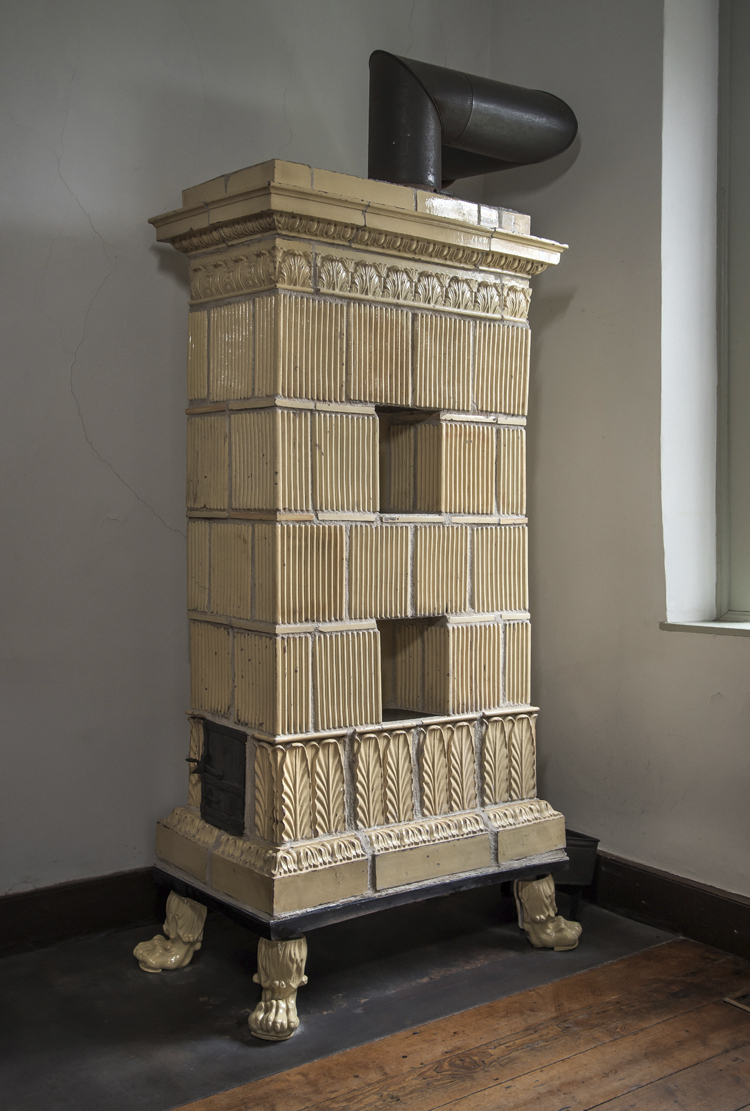
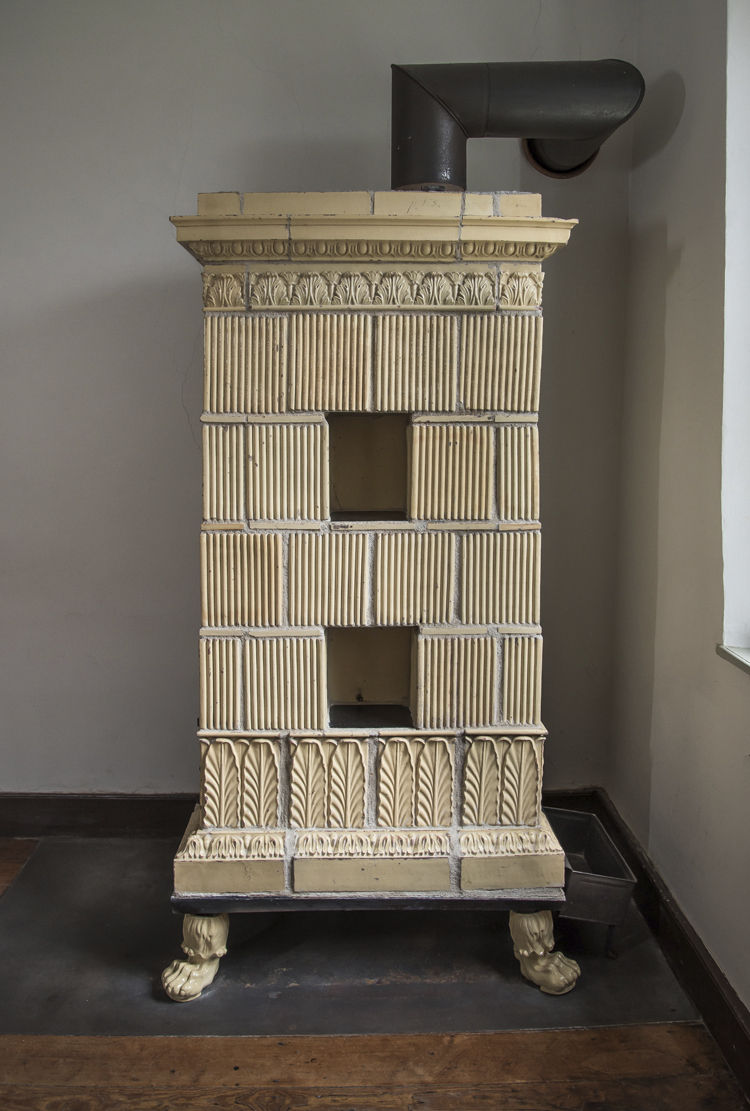
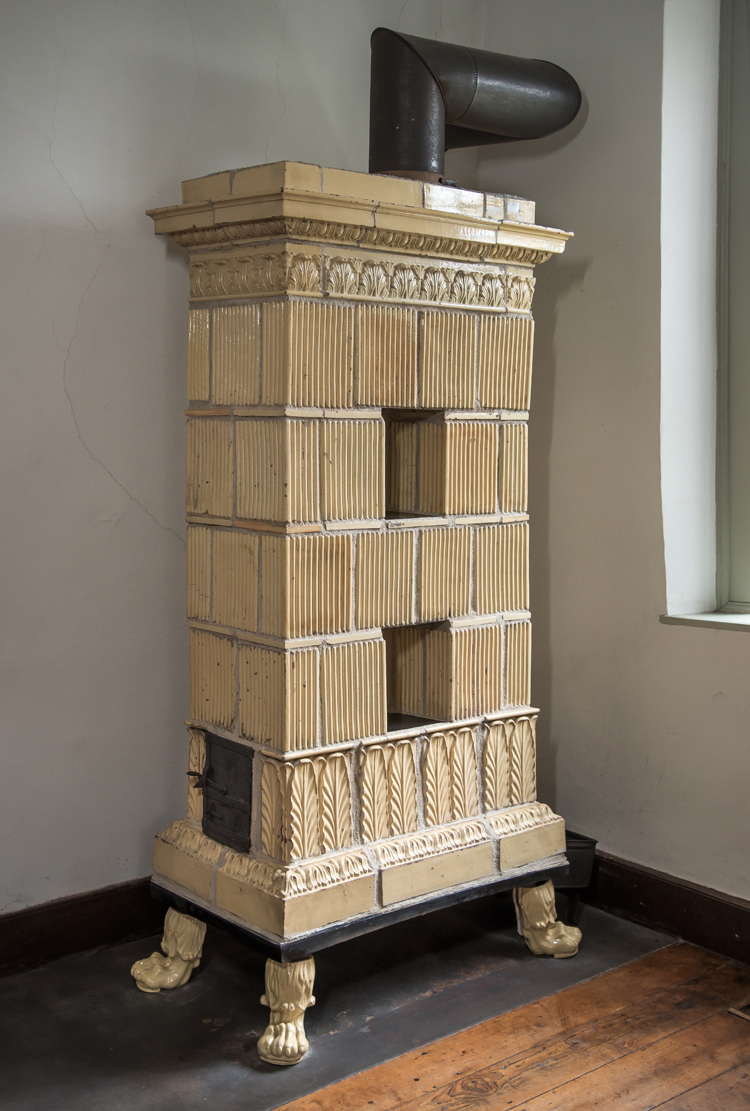
The Vogler House is believed to have had tile stoves because of the fragments of at least two different types found in the back yard. However, it is possible that these fragments came from the earlier Anna Catherina House, which John Vogler moved in 1819 and later converted to a carriage house.
By 1840, this stove would have been burning bituminous coal imported to Salem.
“Schaffner…arrived in Salem in 1833. An industrious sort, Schaffner was placed with John Holland but shortly found that he could not remain in that situation and applied for permission to open his own shop. He was allowed to purchase the old 1766 [Builder’s House] near the northwest boundary of Salem, the members of the Collegium stating at the same time that they [regretted…that Schaffner could not take over the pottery altogether in Holland’s place; the latter shows little zeal in carrying it on.] Schaffner carried on what evidently was an excellent trade in both fancy and utilitarian wares, though his shop increasingly had to compete with inexpensive and readily available imported ironstone and other such manufactured ware. The heyday of the potteries in Wachovia had occurred in the eighteenth and early nineteenth centuries, when there was no competition from the outside. Nonetheless, Schaffner’s pottery continued to operate until the end of the century – after the 1870’s in the hands of Schaffner’s former apprentice, Daniel Krause, who was Salem’s last potter.” (Bivins & Welshimer, p.38-39)